-
화면크기
-


- 재단소개
- 알림
- 자료
- 참여
- 정보공개
- 홈페이지이용안내
- 작성일 2014.11.06
- 조회수 3580
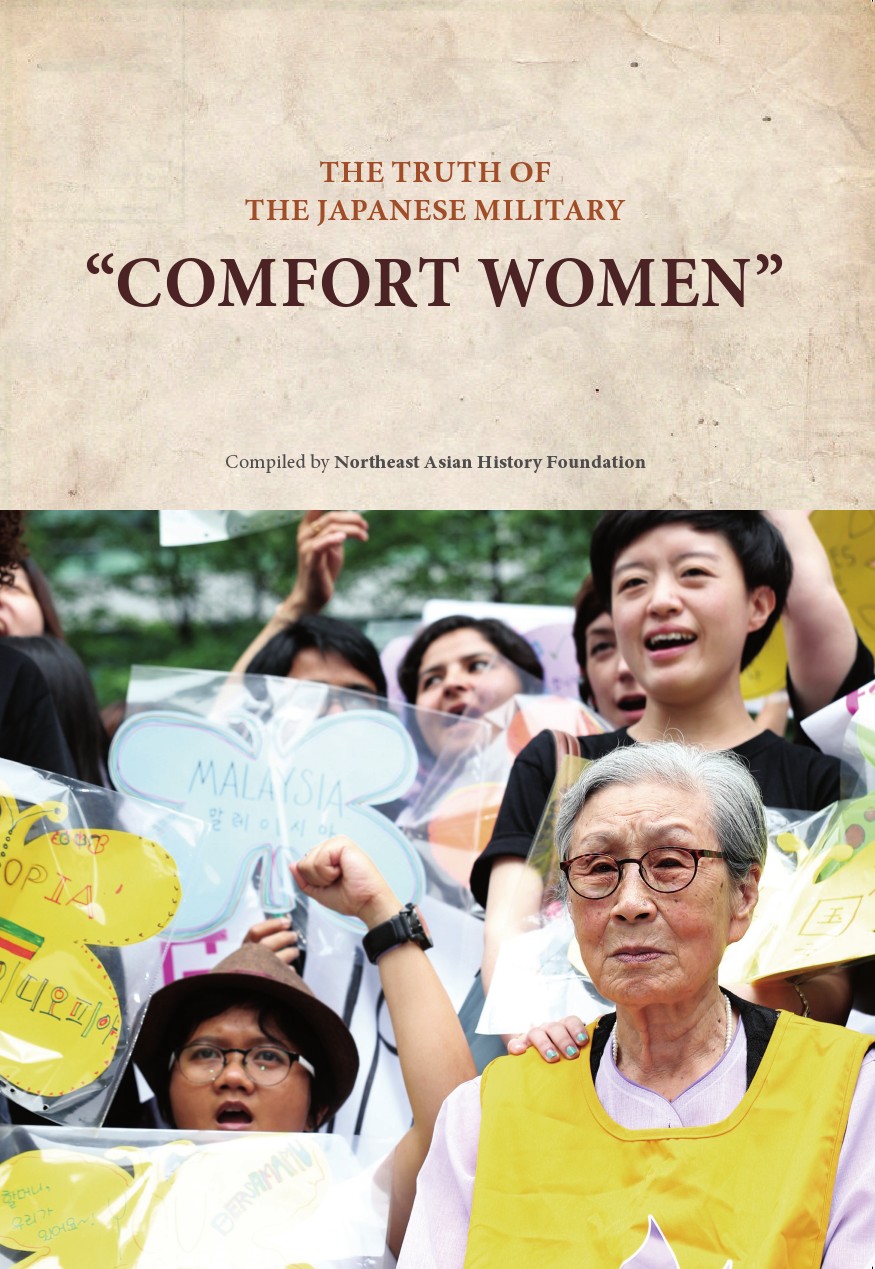 |
THE TRUTH OF THE JAPANESE MILITARY “COMFORT WOMEN” |
|
|
o 저자 |
동북아역사재단 편 |
|
|
o 사양 |
신국판 | 72쪽 |
|
|
o 분류 |
외국어도서 |
|
|
o 정가 |
비매품 |
|
|
o 발간일 |
2014년 12월 10일 |
|
|
o ISBN |
978-89-6187-344-4 |
|
|
저자 |
||
| 동북아역사재단 | ||
|
도서 소개 |
||
|
The crimes committed against these women are an unresolved international issue, with increasing demand for redress by Japan. The debate came to the forefront in 2007, in part because of the passing of the United. States House of Representatives House Resolution 121, which declared that the system of forced military prostitution by the Japanese Government was “unprecedented in its cruelty” and “one of the largest cases of human trafficking in the 20th century.” The Resolution also called on the Japanese government to educate present and future generations about this inhumane war crime. In 2008, the United Nations Human Rights Council recommended for the third time, following the calls in 2001 and 2005, that Japan take action. The state legislatures of Illinois, New York, and New Jersey also passed comfort women resolutions in 2013. Overall, from 2007 to 2013, 12 comfort women resolutions were passed in the United States, Australia, the Netherlands, Canada, the European Union, and Taiwan. In Japan, 43 Local assemblies including Kyoto City, Takarazuka City, and Shimane Prefecture passed resolutions beginning in 2008. The Japanesecentral government has been reluctant to respond to the demands of the comfort women victims, and government discussion on the issue at the director-general-level of the Korean and Japanese foreign ministries only took place recently in April, May, and July 2014.
|
||
|
차례 |
||
|
Preface
Chapter1
Who Are the "Comfort Women"?
Chapter2
Comfort Women or Sex Slaves?
Chapter3
Was There No Forced Recruitment?
Chapter4
Just Prostitutes?
Chapter5
Did Japan Offer a Sufficient Apology and Compensation?
Chapter6
Why should the Comfort Women Be Remembered?
Chronology of Events
|
||