-
화면크기
-


- 재단소개
- 알림
- 자료
- 참여
- 정보공개
- 홈페이지이용안내
- 작성일 2010.06.24
- 조회수 4410
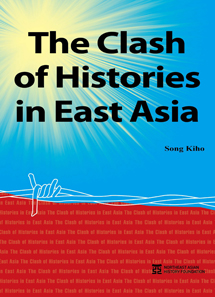 |
The Clash of Histories in East Asia |
|
|
o 저자 |
Song Kiho |
|
|
o 사양 |
46배판 | 457쪽 |
|
|
o 분류 |
외국어도서 |
|
|
o 정가 |
20,000원 |
|
|
o 발간일 |
2010년 4월 |
|
|
o ISBN |
978-89-6187-177-8 |
|
|
저자 |
||
|
Song Kiho |
||
|
도서 소개 |
||
|
In .January 2007, China’s Northeast Project came to a close. This five year-long project, which began in February 2002, had been a major source of controversy and tension between South Korea and China. Today, just months after the project concluded, the dust seems to have already settled, and the project is quickly fading from the spotlight it once occupied. The whole matter is in fact rapidly and silently receding to the background, with no talk of a retrospective, not to mention an attempt to glean lessons for the future. As the spring term was drawing to an end in 2007, I asked students in my undergraduate history class to write a short essay on the course they had just completed. One of the essays that caught my attention was by a freshman. He wrote, “Through this course, I got to learn about the Northeast Project, something I had never heard of before.” This young man had never heard of an affair that was media fodder for fully five years. Unbelievable as this may be, the student’s ignorance points to an all too familiar fact about Korean education: it has lost touch with society. This book was originally written as a textbook for an undergraduate history course titled “Disputes on Ancient Korean History in East Asia.” Although the title emphasizes ancient history, and mirrors the main period which concerned the Northeast Project, the course deals comprehensively with all recent debates among the three East Asian countries of South Korea, China, and Japan concerning the history and territory of Korea. My modest hope is that the book may serve as a primer on this subject, thus far never explored or addressed in any meaningful fashion by other texts.
|
||
|
차례 |
||
|
Chapter 1. Nationalism and History Education
|
||