
- Major ActivitiesMajor ActivitiesThe Northeast Asian History
Foundation is the center of
Northeast Asian history research - ResourcesResourcesThe Northeast Asian History
Foundation is the center of
Northeast Asian history research - NewsNewsThe Northeast Asian History
Foundation is the center of
Northeast Asian history research - IntroductionIntroductionThe Northeast Asian History
Foundation is the center of
Northeast Asian history research
-
Screen size
-

- Major Activities
- Resources
- News
- Introduction
- Website Guide
Resources
Publication
- Date 2010.08.25
- Hit 4750
1. All rights of the contents and the electronic files in the Webpage are reserved for the Northeast Asia History Foundation.
2. No part of the Webpage may be reproduced, stored in retrieval system, or transmitted, in any form or by any means, without the prior permission.
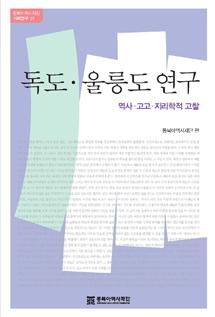
Title: (Northeast Asian History Foundation Special Research Series 37) Research on Dokdo & Ulleungdo: An In-Depth Historical, Archeological, and Geographical Study
Hong Seong-deok, et al.
Northeast Asian History Foundation|New A5 Edition|297 pages|12,000 won|January 15, 2010
ISBN 978-89-6187-170-9-93900
For a proper understanding of Dokdo, the subject of study should not be limited solely to Dokdo but expanded to include a wider geographical and chronological scope. This is because Dokdo and Ulleungdo were not deserted islands that only existed on maps, cut off from human activity. Since ancient times, the islands functioned as sites of human activity. This is the starting point of the title. The work undertakes a sweeping examination that spans the ancient period to the modern/contemporary era on the various ideas and thought systems pertaining to Dokdo and Ulleungdo from historical, archaeological, and geographical perspectives. The title discusses the Korean perception of Ulleungdo and Dokdo as demonstrated by the An Yong-bok incident in the 17th century and by Imperial Edict No. 41 issued by Daehan Jeguk [Great Han Empire]. It also looks at Japan’s understanding of Dokdo as evidenced by Dajokan documents from the Meiji period. The book also discusses ancient Ulleungdo society by analyzing ancient artifacts that have been unearthed there. Finally, there is an analysis of Dokdo’s function and value from a geopolitical perspective.
Table of Contents
• Diplomatic Negotiations between Korea and Japan in the Late 17th Century: Centering on the An Yong-bok Incident / Hong Seong-deok
Ⅰ. Foreword
Ⅱ. Formation of Korea-Japan diplomatic system in the 17th century
1_Korea-Japan diplomatic code in the 17th century
2_Characteristics of the Korea-Japan diplomatic system
Ⅲ. Abduction of An Yong-bok and diplomatic negotiations
1_Jukdo passage permit and the abduction of An Yong-bok
2_Diplomatic negotiations surrounding An Yong-bok’s abduction
Ⅳ. An Yong-bok’s 1696 passage to Japan and Korea-Japan relations
1_Edo bakufu’s ban on passage to Jukdo
2_An Yong-bok’s passage to Japan and return
Ⅴ. Conclusion
• Analysis of Gojong and Lee Gyu-won’s Understandings of Usando / Hosaka Yuji
Ⅰ. Foreword
Ⅱ. Usando and Songjukdo in Gojong and Lee Gyu-won’s conversation
1_Gojong’s basic understanding of Usando
2_Lee Gyu-won’s basic understanding of Usando
3_Lee Gyu-won’s understanding of Songjukdo
4_Gojong’s understanding of Songjukdo and Imperial Edict No. 41
5_Lee Gyu-won’s understanding of Usando after his ascent to Seongin peak
Ⅲ. Process of Usando’s name changes and the establishment of “Usando=Dokdo” theory
1_Yusangukdo and the implementation of the repatriation policy
2_Unfolding of Joseon’s repatriation policy and Usando
3_Usan and Mureung in Goryeosa Jiriji (1451)
4_Usan and Mureung in Sejong Sillok Jiriji (1454)
5_Usando and Ulleungdo in Sinjeung Dongguk Yeoji Seungnam (1531)
6_ Paldo Chongdo, supplementary map to Sinjeung Dongguk Yeoji Seungnam
Ⅳ. Insight into Usando gained from data collection and surveys of Ulleungdo
1_Ulleungdo survey: Lagging effort
2_Yodo, Sambongdo survey: Failed attempt
3_Jang Han-sang’s dispatch, the first in 180 years
4_Data collection in and around Ulleungdo by Joseon dynasties
Ⅴ. Conclusion
• The Historical Characteristics of Dajokan Documents in the Early Meiji Period/ Park Sam-heon
Ⅰ. Foreword
Ⅱ. Restoration of royal rule and the Dajokan system
1_Politeia Composition(政体書), Dajokan system and documentary administration
2_Personnel ordinance(職員令), Dajokan system and documentary administration
Ⅲ. Dajokan system after “haihan chiken” [abolition of fiefs and establishment of prefectures]
1_Dajokan’s Council of State(三院制) and documentary administration
2_Dajokan polish(潤飾) and documentary administration
Ⅳ. Historical significance of the 1877 Dajokan order
• Several Issues Concerning the Society and Groups of Ancient Ulleungdo: Centering on Ancient Artifacts Gathered from Ulleungdo Surveys / Oh Kang-won
Ⅰ. Foreword
Ⅱ. Ancient artifacts of Ulleungdo
1_Everyday goods (earthenware)
2_Production tools
3_Processing tools
4_Weanpory (iron arrowhead)
5_Ornaments
6_Stable equipment
7_Objects of authority (bronze crown)
8_Objects for personal grooming
9_Religious objects
10_Building tools (a piece of Concave Tile : 암기와片)
Ⅲ. Several Issues Concerning the Society and Groups of Ancient Ulleungdo as Gleaned from Artifacts
1_Producers and places of origin of earthenware found in Ulleungdo
2_Chrolonology of ancient artifacts of Ulleungdo
3_Social hierarchy and classes of ancient Ulleungdo
4_Mechanism behind social integration in ancient Ulleungdo
Ⅳ. Conclusion
• Dokdo’s Functional & Spatial Value and Ownership: A Geopolitical Perspective / Im Seok-sun
Ⅰ. Foreword
Ⅱ. Preliminary discussion on Dokdo among geographers
Ⅲ. Dokdo’s spatial structure
1_Spatial relationships
2_Natural geography
3_Human geography
Ⅳ. Dokdo’s functions and value
1_Function and value of an island
2_Dokdo’s spatial value
3_Dokdo’s past, present, and future for Japan: A macroscopic historical review
Ⅴ. Legitimacy of Korea’s ownership of Dokdo
1_Distance between inhabited island (Ulleungdo) and Dokdo
2_Territorial waters and island in terms of history
3_ROK’s occupation and use of Dokdo
4_Official documents of Korea and Japan
5_Ancient maps produced in Japan
6_Regarding the possibility that Dokdo & Ulleungdo are twin islands
Ⅵ. Conclusion
- No Data